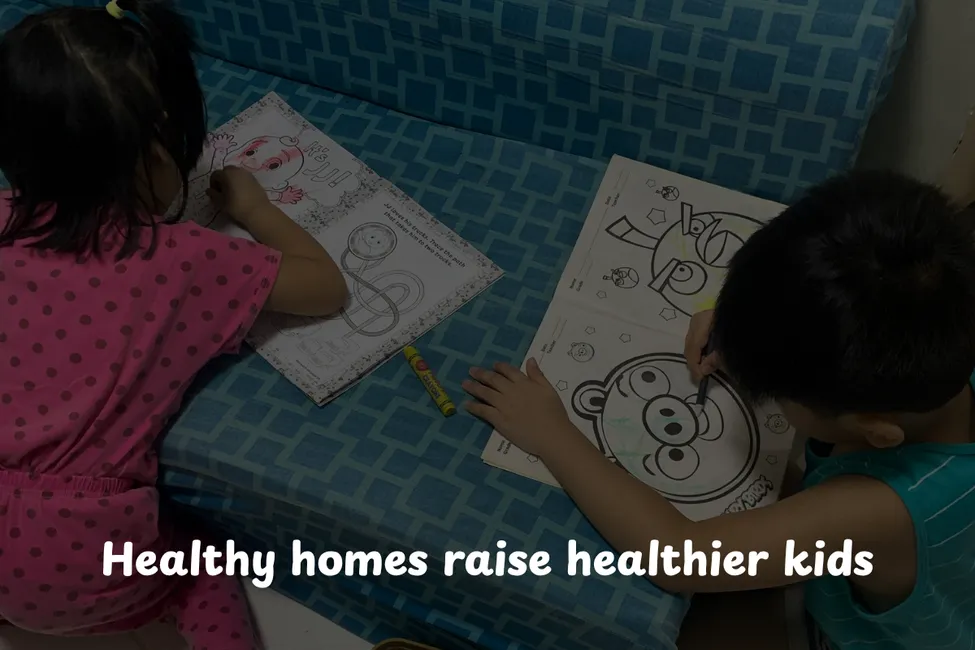
Healthy homes raise healthier kids
Lately, we've all seen heartbreaking stories of young people getting involved in violence and crime.
As parents, it's hard not to ask,
"What is happening to our children?"
There isn't one simple answer.
Children are influenced by many things, their friends, social media, poverty, trauma, school, and the choices they make as they grow.
But before they meet the world...
They first experience home.
Home is a child's very first classroom.
It's where they first learn what love looks like.
How conflict is handled.
Whether it's safe to express emotions.
Whether mistakes are met with shame or guidance.
Long before a teacher, coach, or friend influences them, children are already learning from the people they live with every day.
This isn't about blaming parents whenever a child makes a wrong decision.
Many loving parents are raising children while carrying financial pressure, exhaustion, personal struggles, and responsibilities that never seem to end.
And not every child raised in a healthy home will always make the right choices.
But one truth remains:
The emotional atmosphere at home shapes how a child grows.
A mentally healthy mom.
A present father.
Parents who communicate with respect.
A home where children feel safe enough to talk.
These don't guarantee a child will never make mistakes.
But they give children something priceless:
A place to learn empathy.
Resilience.
Accountability.
And emotional security before the world begins teaching them something else.
Children learn more from what they see than what we say
As parents, we spend so much time teaching our children to be kind.
To say "please."
To apologize.
To be respectful.
But children don't only listen to what we say.
They study how we live.
They notice how we react when we're stressed.
How we speak to our spouse.
How we handle disagreements.
How we respond when life doesn't go our way.
Our everyday actions quietly become their everyday lessons.
That's why parenting isn't just about correcting behavior.
It's also about modeling behavior.
Looking beyond the behavior
Whenever a child gets involved in violence or crime, it's easy to focus only on what they did.
And yes—actions have consequences.
Accountability matters.
But if the conversation ends there, we may miss an important opportunity.
Maybe we should also ask:
"What happened before the behavior?"
Was there someone who truly listened?
Did they have healthy adults who taught them how to process anger?
Did they feel emotionally safe enough to ask for help?
Did they know they were loved even when they made mistakes?
These questions don't excuse harmful choices.
They help us understand how we can prevent more children from making them.
Because prevention doesn't begin in a courtroom.
It begins in ordinary homes.
Around dinner tables.
During bedtime conversations.
In moments when children feel seen, heard, and safe.
If we want healthier communities tomorrow, we have to invest in healthier families today.
Because before children belong to society...
They first belong to a home.
In Part 2, we'll talk about what emotionally healthy parenting really looks like—and why your children don't need a perfect parent.